Mayor John Labrosse: Leadership, Service & the Realities of Local Government
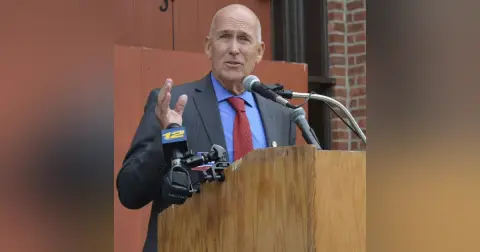
How does a local mayor make things happen? And what drives someone to take on that responsibility? In this episode of No Wrong Choices, we explore the career journey of Mayor John Labrosse, who has led Hackensack, NJ since 2013. From his unconventional path—starting in the seafood business and coaching youth sports—to stepping into public service, Mayor Labrosse shares how he found himself at the heart of his community’s transformation. He takes us behind the scenes of running a small city, b...

 Apple Podcasts

 Spotify

 Castro

 RSS Feed

 Youtube Music
How does a local mayor make things happen? And what drives someone to take on that responsibility?
In this episode of No Wrong Choices, we explore the career journey of Mayor John Labrosse, who has led Hackensack, NJ since 2013. From his unconventional path—starting in the seafood business and coaching youth sports—to stepping into public service, Mayor Labrosse shares how he found himself at the heart of his community’s transformation.
He takes us behind the scenes of running a small city, balancing leadership with a full-time job, and navigating the real challenges of local government. Plus, he reveals how lessons from coaching, construction, and even working in Little Italy shaped his ability to lead.
Key Highlights:
- The Unlikely Path to Public Office – How a youth coach and longtime community member became mayor
- Inside Local Government – What a mayor really does in a council-manager system
- Building a Community Legacy – The urban renewal of Hackensack and lessons in city leadership
- How to Get Involved – Advice for those looking to make an impact in their own community
Whether you're interested in leadership, politics, or the power of civic engagement, Mayor Labrosse’s journey is a fascinating look at what it means to step up and serve.
🎧 Listen now on your favorite podcast platform!
To discover more episodes or connect with us:
00:00 - Introduction to the episode
05:00 - Meet the Mayor of Hackensack: John LaBrasse
15:00 - The Real Role of the Mayor in Local Government
30:00 - Transforming Hackensack: Urban Renewal Insights
45:00 - The Challenges and Joys of Civic Engagement
01:00:00 - The Future of Hackensack and Community Involvement
0:02 How does a local mayor make things happen and what drives somebody to take on that responsibility? We'll explore the answers to those questions and beyond during this episode of no Wrong Choices. Thank you so much for joining us. I'm Larry Samuels, soon to be joined by Tushar Saxena and Larry Shea. Before they step in, please be sure to like and follow our show. Where you're listening right now. Your support enables us to keep bringing these great journey stories to life. Now let's get started. This episode features the mayor of Hackensack, New Jersey, John LaBrasse Tushar. As a native, a resident and citizen of Hackensack, you are undoubtedly the right person to set up this conversation, so take it away, Thank you very much there, larry, sam.
0:50 So yeah, full disclosure. I have been living in the city of Hackensack for 15 years. I have seen this place kind of grow from, grow from where the main street was a one road, was a one way street, to now where it is a two-way street and there's been a huge amount of urban renewal in this city, so to speak. So part of this town is very suburban, a lot of family homes, and then part of it, as I like to say, a lot of big buildings, a lot of urban space. So this town really has kind of two personalities to it and, to be quite honest, I never really took a lot of interest in what that meant in terms of Hackensack City.
1:32 So who runs it? Now, the odd thing is is that even though John LaBrasse is the mayor, he really isn't the guy in charge, which is really really cool, and you get to kind of see that journey as what it means to be a mayor on the very, very basic level of running a city Right. So running a city basically is it runs the gamut, for whether you run a city like New York or you run a small city like like a Hackensack, new Jersey, everybody has different, different challenges, and some of the challenges are very much the same. Yeah, speaking of full disclosure, I was not on this episode, but I'm sorry. No wonder it was so good, I knew you were going to say that. No, I'm sorry.
2:13 I was not there, though, because it sounds like you guys had a good time. I don't know what a mayor does. I mean, let's be perfectly frank about it, and I do think there is a difference between Hackensack, new Jersey, and, like a New York City mayor or Los Angeles, but you're the face of the community just the same. And I think he really spells out what it is that his job is and kind of gets to the crux of the biscuit about hey, here's what I do every day and this is how we get things done, and it sounded like you guys had a lot of fun, so a really good listen and I learned a lot, absolutely. And I will tease everybody with this. He spent some time in Little Italy in New York, where he learned how to be a politician, so stay tuned for that.
2:57 So, with no further ado, here is Mayor John LaBrasse. Now joining no Wrong Choices is Mayor John Labrosse of Hackensack, new Jersey. Mayor Labrosse has been in office since 2013 and recently announced that he'll be seeking a fourth term later this year. Mayor Labrosse, thank you so much for joining us. Oh, you're welcome. It's great to be here, guys. All right. So, mayor Labrosse, I am Tushar Saxena. I actually live in new jersey, full disclosure. I live in Hackensack, New Jersey. This is the guy who runs my town. He's doing a great job. So, mayor, first question, before we ask you what you do for a living is would you prefer to be referred to as mr mayor, mayor john Labrosse or just john?
3:40 john works for me. Guys, let's go with perfect, perfect, all right. So, john, first question right off the bat is what exactly is it that you do? Well, I actually have two jobs. One, obviously, is the mayor of Hackensack and I am also a safety specialist at Hackensack University Medical Center here in Hackensack, which is quite a large place 8,000 employees. So it keeps me busy. That keeps you pretty busy. Absolutely so, Mayor. Before we go back to the beginning, just to paint a picture, what is the role of a mayor in a town like Hackensack, New Jersey? Well, it's funny because there's all different types of government throughout the land, especially in cities. We have what's called a council manager form of government.
4:22 So we have a city council which consists of five. It's actually called a council manager form of government. So we have a city council which consists of five. It's actually called a week form of mayor. It's like a part-time position, I guess you would call it. The city is basically run by a city manager, but we make all the laws and you know we make the rules and the laws that govern Hackensack and we're involved with a lot of different things redevelopment, stuff like that. We, you know that's all on the council. That former government's been around, I think, since 1923. There's only about six or seven municipalities in the state of New Jersey that use it. But I like it because it's nonpartisan, which means you don't run as a Democrat or Republican or an independent. Oh, interesting, yeah, we all run.
5:03 However, you know, you just run. It doesn't matter what you are. Your job Exactly. And the mayor is actually not voted on by the public. The mayor is voted on by the council once the election is over, and actually I was elected at first in 2009 as the councilman. I sat there with four years, I was the only one to get in. And then 2013, we, 2013, I, I, we ran a new ticket slate of people and, uh, we swept that year and I've been going ever since. Yeah, you've been sweeping ever since the guys what 15 and 0, I believe. Um. So, john, uh, I guess I'll, I'll, I'll ask this before I actually ask you. You know, what kind of what did you want to do, as you know, when you were younger?
5:44 I guess the question is, you know, does it matter whether you're a Republican or a Democrat on the mayoral level? I? don't think so. I mean I would like to see all local governments be nonpartisan, because it forces people to work together. Nothing's better than having Democrats and Republicans on the same council working together. You know you get different points of views and even whether you're all Republicans or Democrats, you're not going to get along on everything. So I just think it suits the public better. I think the public, it's fair to the public to have people from each side of the aisle on your council. Think about it the House, or the Senate, was all one. Yeah, exactly. Oh it'd be great, perfect example.
6:30 We'd be living in much simpler times. There's no question about that, right, right. So, john, take us back to the beginning. Who was a young John LaBrasse, and I guess my follow-up to that would be the people that you grew up with. Would they be surprised that there's a mayor in front of your name today? Yeah, it's funny because I actually I was born in Jersey, raised in Jersey, moved. My mother was divorced when I was eight or nine Well, actually when I was four, but when I was eight or nine she remarried and I lived here in Hackensack at that time and we moved to Scottsdale, arizona, which back in the day was, like you know, here I am a nine-year-old little boy moving to the westmost western town with cowboys and horses. It must have felt like being on another planet right oh it was great, it was a trip.
7:12 I mean literally when I moved to Scottsdale the horses still had to ride away on the road and that makes me sound like I'm 150 years old, but that was back in the 60s or maybe early, yeah, early sixties. So yeah, it was a trip and uh spent my time out there and went to high school out there, graduated high school, was supposed to go to Arizona state, but I decided I had a brother who lived here still and uh, instead of going to college back there, I uh out there, I packed my bags, packed my car and drove cross-country and moved back to New Jersey. I've pretty much been here ever since. So, after you come back to the East Coast, saying essentially that you did not bother going to college, what was the next step for you, john?
7:58 So then, what did you then get into at that point? Well, my brother's wife's family was in the seafood business and ended up working in the seafood business for years, had my own seafood place for a while. I've worn a lot of different hats and I think that helps me as a mayor, I've been a chef, I've worked in the seafood business, I've been in trades in construction, so I've done a lot of different things in my life and I really have learned from, you know, was able to take a little bit of everything from all those different trades to help me along the way. What did you when you were a chef? What were you making? What's your expertise? I was the saute chef at a place called the Finn and Claw, which is now Seasons Restaurant up in Washington Township, New Jersey.
8:43 Worked at a couple other smaller places. My brother-in-law had a place in New Milford, but the best place to ever work was this little clam bar in downtown Little Italy called Little Charlie's. It was famous at the time and was a lot of characters, if you know what I mean. Moving in and out of that place. I can't imagine. I can't imagine. Yeah, it was good. The famous line I got from Charlie, who was my boss, was you don't hear anything, you don't say anything. You don't know nothing. Exactly. When was that? Was that 80s, early 80s, 70s? Early 80s. Early 80s. What a great time in New. York and I actually have two kids. What an interesting time in New. York. You guys are familiar with San Gennaro Feast.
9:25 I'm sure, of course. Absolutely. I had a clam stand, a seafood stand, in San Gennaro for eight years and that was a trip, another learning experience along the way, I'm sure you weren't seeing anything or hearing anything there either. No, no, no no, yeah, I could offline, I could tell you some really good stories about that. That was crazy. Yeah, you probably learned a lot about politics at that time too. That was probably how you started to get your street smarts about you, if that is the right way to put it. Fine line between what goes on back then, over there, and politics in general, fine line between the two. So what prompted you to want to go into politics? To be more of a bigger part of the community. To be more of a bigger part of the community. So it was back.
10:05 You know I work at the hospital, but the hospital was building a new cancer center and there was a developer's agreement. A lot of my friends were firemen at the time. There was a developer's agreement that included getting rid of eight of our firemen who were EMT trained firemen. Basically, they were the ambulance service for the city. There were a lot of people against it in the city and when I say a lot, I mean a lot. There were lawn signs everywhere called Save the Eight because they didn't want these eight guys fired. But they ended up getting rid of them and taking over the ambulance service. But while doing that, going to all these meetings, people were nudging me oh, you should run for city council.
10:45 I didn't have a political bone in my body, really, but I get nudged and nudged. And I talked to my wife and said you know what, maybe I should do this. And we put a ticket together. There were five of us and, like I said before, I was the only one to get on. So I sat there with my four opponents for four years. But I had a lot of support from the public because they liked what I did during the Save the Eight campaign. So I did my four years there. We put another ticket together in 2013, and that's when I was elected as mayor and that was the start of it. So you've been around, you're working, you've been in the area for a long time, you know the people. But is there a process you go through to, to prepare yourself to, to run an election, to to develop the chop, so to speak, to to win?
11:35 Yeah, it was. Yeah. When you first start I mean, we certainly weren't seasoned veterans at this, but there's a lot of work. There's a lot of. In order to run, you have to get petitions signed, which is about 400. You have to go out and get literally get 400 people to sign for you just to be able to run, which is, you know, it's a little bit of a task. When you're first starting, that's a lot easier now because we have a base, but when you're starting out it's not. It's not that easy, but we were able to do it. And uh, you know, thank God for that, save the eight campaign, cause that really, really I think uh was the thing that got me in on that first run. Is there beyond that, like knowing that you're going to be doing a lot of public speaking, assuming that you're going to be doing debates and things of that nature, like is that, can you learn that stuff?
12:24 Or or was it all second nature and natural? Yeah Well, you kind of thrown it to the fire. You know it's uh, I was never a public speaker before but I found I felt pretty comfortable doing it in most places. I uh I don't have an issue of speaking in public and uh, it's, you kind of get to have fun with it, Like you guys I'm sure with with you know, when you're interviewing people, you know it becomes enjoyable after a while and you know when you're dealing with the public. You can have a lot of fun with it. So when you say your first time around you had to get 400 signatures, what does that mean? You're knocking on doors. You're talking to folks. What's that process like? Yeah, back then it was. You know a lot of phone calls hey, I'm running for office. We just signed our petitions. You know there was five phone calls that you have to make before you got signature number one.
13:14 Uh was, it wasn't that many. You know I, I spent a lot of. I was a youth coach in town for 15 plus years, three different sports, so it was very visible in the name in the community Right. Um, that was also a big plus for getting elected the first time. I mean half the people you know I've coached hundreds and hundreds of kids in this town through the years and was a huge help. So I coached football, I coached baseball and I coached wrestling, especially wrestling. Both my boys were wrestlers. So, and in each sport you guys, I know you guys are involved with sports. I know you guys, I think you work for one of the sports networks, don't you? Yeah, Well, I'm over at CBS and for many years we Larry Larry Samuels and I, one of our co-hosts, who's not here with us today we actually hosted a sports show at Sirius radio for many years.
13:58 So yeah we're, we're pretty, we're pretty much ingrained in the, in the sports culture, for sure. Yeah, so you pretty much ingrained in the in the sports culture, for sure. Yeah, so you know how passionate parents are about sports. Oh, my god, way too passionate sometimes, whether it's whether it's kindergarten or in college, if your kids in the sport, uh, you know you're, you're in, uh neck deep with them. So, uh, yeah, that was a big help for me, um, but it's a lot of work. There's a lot of door-to-door. The campaigning is a lot of work. I mean you wear out your door to door. The campaigning is a lot of work. I mean you wear out your shoes. I mean Hackensack's not that big of a town as far as walking goes. We try to walk the whole city and you know there's a good month or two of campaigning where you just every night walking, every weekend walking, knocking on doors, introducing yourself to people, you know, asking them what their issues are, and that really is the best way to do it.
14:45 You got to get out there and meet the people. So, John, when you're first beginning this journey into now, you know, being into politics, you mentioned a moment ago that you know you were a youth coach. You coached a number of different teams and got to know the community that way. How important was it for you to have not only that, your own profile amongst the community, but for you to get to know the community. How important was it for you to have that kind of experience, that life experience, before you really entered this venue? Well, I can honestly say, of all the things I really, really enjoyed the most in my life, it was coaching kids and, of course, being competitive. We had some architects put out, some great athletes, some great teams for sure, especially especially football, wrestling baseball as well.
15:31 but high school's right down the street from me. Absolutely, yeah yeah, and you know you're, I've always lived by the rule your high school is only as good as your junior sports teams. Um, it's, it's a great feeling to uh get kids to a another level, bring them, you know, bring up their, how good they are. And another thing is you don't write it. You know one thing I learned is never write off a kid. A lot of coaches do that and you never know what they're. You know what they're going to grow up to be and how good they're going to be, and I've seen kids that I thought would not be that good end up being the, you know, the star of the high school football team. So you know you never write anybody off and you treat everybody fairly and, uh, you know everybody gets their shot and, uh, I really enjoyed coaching. If I could do it all over again, I would.
16:13 So you get into office and you know, as we're coming out of a political season, I'm thinking about, uh, the letter that Joe Biden left for Donald Trump at his desk afterwards, Like, is there a passing of the baton from one administration to the next? You know what happens in mayor land, so what? happened in my mayor land is the day our first day in we basically opened up the cash drawer for the city and found out. It was empty. No, I wish it was just empty. And we were $33 million in debt which I didn't know about, and I was a councilman for four years. So you know, I was never never, you know given privy to the information and it was quite a shock.
16:57 So we we had to do some quick scrambling. But I have a deputy mayor who was a brilliant lady, very smart, very good with numbers. She was actually an aerospace engineer back in the day when there were very few women in that field probably a handful and, yeah, very smart, and we put together a program on how to pay this off. But we also knew we were going to have to bring revenue into the city somehow. Now Hackensack, back in the day let's go back to the 50s, 60s and 70s was where the county seat. We were the shopping mecca of Bergen County. There were no malls. Malls didn't exist. Malls came in in the mid-70s and right here we had the Bergen Mall, right outside of Hackensack and Paramus, and when the malls came it really hurt not just Hackensack but almost all the downtowns in Bergen County and most of them recovered pretty quickly, but we didn't.
17:57 There were some things. I don't know if you're familiar with Main Street, but Main Street was made into a one-way street which is not conducive to shopping. It's not conducive to anything except getting out of town really. And we knew we had to change all that and we put a program together. We made it a two-way again, we redid the streetscape sidewalks, we separated the sewers. All this took a lot of money and a lot of it was based on redevelopment A lot of these apartment buildings, you see, you see River Road, down that area and down by Fashini Park, and we put about 3,000 new citizens in the downtown area already.
18:47 So that's a big plus for us. There's a program the state put out to help downtowns like Hackensack, who were struggling for years. I mean, I'll put it this way Twelve years ago Hackensack was not even safe to walk the downtown. Yeah, at five o'clock at night the businesses closed, the shades came down. Uh, you'd have anywhere from 50 to 100 homeless people on the street every night. You know camping out and you know just didn't not belonging there. We found that other towns, when they had a homeless person, would put them in a cop car and drop them off on Main Street. In Hackensack, oh, wow. That's how bad it was. And we put an end to all that. We came up with this initiative called the Quality of Life Initiative, working with the Bergen County Shelter, and we were able to get a lot of those people, some help off the streets, and it was a a blessing and it's, you know, haven't really seen that problem since, and now when I go down main street, even at six, seven in the morning, I see people jogging, walking their dogs.
19:45 You know the coffee shops are open and business is brisk. So it's a. It's a totally different vibe from from a decade ago all right. So, mr mayor, um, and I will attest you know I have been, I've now lived in Hackensack for about almost 15 years at this point, so I have seen the tremendous, the tremendous change that's happened. And I got to admit I was not. I was not happy when we changed the main street to a two way street. I've just been so used to it going one way. It was easier for me that way. But I agree, now it makes so much more sense the other way. It makes sense having Main Street be a two-way street.
20:26 It makes 100% sense. My question to you, I guess, is this when you now put together and now as a mayor, you obviously have to put together a team, as you said, the town's not run by a mayor, the city's not run by a mayor, it's run by a city council. So, when you put together a team, are you looking for as you mentioned a moment ago, one of the members of your team is, you know, is great with numbers. So, if you're putting together that type of account, that type of a group, are you looking for people who are able to do one thing very well they do, this person does one thing very well something to kind of augment so that where the the sum of the parts make the whole that much better. Yeah, that's a great question We've had. We've had some different players on the council through the through the last four councils and the one thing I've learned is everybody has their place.
21:13 You know, a couple of guys were like me. There were coaches for years. Right now there's there's two on the council. One was a soccer guy, the other one was an athletic director in high school, so he's got a lot of sports experience, the financing part and all that. You know. I mentioned the deputy mayor. That's hers and she really is like the kingpin and driving force with the redevelopment. But yeah, you want to have a mix of people and we all do different things and I almost laugh because being a mayor for me is almost like, you know, I'm like the lead singer in a rock band, right, right. So that's you know, I'm like the front guy, but I think it's more.
21:55 It's a personality thing and just being able to get after've got to have thick skin. I'll tell you that much because you put up with a lot of stuff sometimes, but you've got to be able to listen to people and digest what they're actually saying to you and look at things from their point of view, because these are taxpayers and they have their rights and they have the right to express their feelings. When they come to a council meeting, we try to address everything we can. What's the hardest part of the job. There's a lot of name, especially, I'm going to say, since COVID and some of the nonsense that's gone on in the country for the last few years. Things have, people have changed. I've noticed people have changed a lot, especially with the social media as it is now.
22:40 But yeah, it's been a crazy ride. I mean, it's something I never in my life, you know, I don't know if it's ever happened to you guys, but you end up in a position sometimes you're like, wow, how'd I get here? But I've enjoyed it, it's good. What I really enjoy is, you know, like I said, I said with the, with the kids, coaching the kids, and you see them as they grow and get better. I see that with the city as well. And, uh, of all the things, I think that's probably helped me the most to be the mayor is probably the coaching, cause you have to deal with a lot of different people. You've obviously seen Hackensack now as a I would say uh, uh, say the least, as a longtime resident. You've seen change. You've seen changes and you've obviously been part of that major change.
23:23 What do you take the most pride in at this point? The change that has happened in the city that you've seen over these years. Well, the best part for me is you always want to be proud of where you live and knowing what Hackensack was like back in the day when it was a vibrant downtown, um, and then seeing it kind of fall by the wayside and being able to bring that back in today's world because the malls are still there, you know. So we were able to do this with. You know the malls people still go shopping all the time to the mall, but it's a different, different type of downtown now with a lot of people living on it. People walk the streets. They're not getting in their car and leaving to go get something.
24:05 They can buy stuff right on. They can go out to eat or go to the pubs or whatever, and I really enjoy it. I enjoy going downtown myself. I wish more people would use downtown. Which is your favorite spot downtown? uh, my favorite restaurant. Uh, I don't want any hurt anybody's feelings, but that would go. That would go with casual bottom. My buddy benny owns it. Oh, I love that place. Yes, absolutely love that place a great little vibe. Uh, he has that place. He has a place in new milford, and there's also a vietnamese place called Pho Saigon, which I love. So but they're all good. We've got Churro Pot. We've got some great restaurants downtown and it's it's a lot different than it was.
24:49 You could have the best sandwich. One of the best sandwich places in Bergen County is right here in Hackensack. Yes, absolutely. What are you talking about? Yeah, exactly, the number one. Yeah, absolutely. What are you talking about? Yeah, exactly the number one. What's it like when you walk into those places? You know, I live in a condo in New York City and I've been approached multiple times to run for the board and every single time I say thank you while running in the opposite direction, because the last thing I want is, when I come home at the end of the day, is for somebody to approach me and say hey, I'm having this problem. I really don't want to hear that, I just want to go home. So I imagine, being the mayor of a town, no matter where you go, you must always be on Like, are you able to disconnect from the job?
25:35 And I guess, do you want to disconnect from the job ever? Yeah, well, you got to have some downtime and you know what'll happen You'll crash and burn. But uh, yeah, and it's, it's, it's even a little, you know, a little twist on working at the hospital with as many employees we have. You know, I get people. Can you hand me their parking ticket? Can you fix this? Can you do that? Can you do this? And you know, and, uh, you know, tell them, no, I can't fix it if you parked illegally. That's your problem. I get parking tickets, for god's sake, and I'm the mayor, so you know, pay pay your, pay your ticket type of deal, but uh, yeah, you get it. This morning I had an issue I have every morning. I have a safety meeting at 8 30 and somebody brought up that a manhole cover was off down on atlantic street and uh, you know, thank god they saw it, because I called the city manager, he called the dpw and I went replaced the the manhole cover.
26:27 Somebody could have been injured. But uh, yeah, you get stuff like that all the time. You get. You know, we get uh nixle alerts as well, which all the citizens have access to let you know what's going on in the town, if there's a power outage or if there's street closures, whatever, and that helps a lot because it goes out and it stops a lot of calls from coming in. Obviously, you take a great deal of pride in civic service at this point. Obviously, you've been a mayor for so long You've been on the city council. You take a great deal. You have been a pillar of the community in terms of being a coach as well, so you take a great deal of pride in being civically involved. How do you see that in terms of the younger generation in Hackensack?
27:08 Do you still see that? It's changed. I think the demographics changed in Hackensack a bit. You know we're a population of forty to 50 000. You know that fluctuates. Um, it's like I look at the sports programs today, a lot of the numbers are down, which concerns me when it's going back to sports like baseball, for instance. We just have five, six hundred kids in our program. Now you're in the 200s. But other sports have now come out that are, you know, a lot of kids are doing year-round stuff, club stuff, and they focus on one sport. Years ago everybody played two, three sports. So things have changed. But we still have some strong programs.
27:49 But we could be doing better there, absolutely. What advice do you have, let's say, to someone who wants to get involved the way you have in their community and eventually kind of move up the ladder? I mean, is there a real blueprint for how to do this? Is there a real map to do this? Well, what we do. We have a lot of different boards in town. We have zoning board, we have planning board, we have environmental commissions. We have a lot of different. You know we have planning board. Um, we have environmental commissions. We have a lot of different. You know, we have shade tree commission. I mean numerous library boards. So we try to steer people who want to get involved and want to volunteer into those boards and get them on boards and and and.
28:31 From there we kind of keep an eye on who's you know who's doing good and who's doing what. Um, you know, our, our election's coming this May and this is definitely my last one, because I'm getting up there and I'm pretty much you know. Yeah, but you know how everything runs at this point, come on. Yeah, yeah. Well, you always want to finish the job and we're just about done. So I know this next four years is crucial to get to the point. We need to get to the money coming. The revenue coming in from these new buildings is substantial, but we've also gone out and done close to $80 million worth of infrastructure work for the city, which nobody was doing it, yeah, and especially sewer work and sewer separation work especially sewer work and sewer separation work.
29:19 So we built a new recreation center. We're in the middle of starting bids for the indoor sports facility, which would be the only one of its kind in Bergen County, more than a full football soccer field indoor facility, kind of like a bubble down by Johnson Park. We're putting the money to good use, let's put it that way, and this is all being paid for through redevelopment, through the money that's coming in. Are you happy with what your legacy will be, regardless of what happens in May? Are you happy what your legacy will be? Yeah, I could leave today and I'd be proud of what I've done absolutely.
30:01 What do you consider to be your greatest achievement? Just the main street. I redeveloped my main street and the vibe we've created downtown, you know, probably would be my greatest achievement, Though for me personally, you know I'm still going to hang in with the coaching thing. Is that what's gonna be next after you, after you finally call it a career with this? You're gonna go back to coaching well, I have uh six grandkids. Three of them are wrestling right now, wow, coach them you got a whole team right there. Well, both both my sons are coaches now, so I'm gonna kind of take a back seat. I'll be. I'll be standing next to him during a wrestling match and yell something out, and my son will look at me like what are you doing?
30:42 I say, hey, you learned from the best. Yeah, exactly. That's what you're supposed to be doing. That is exactly what your role is at this point we have we have a lot of fun with the sport. I have one last question for you, which which is sort of a random one. When, when I think about a mayor, I think about ribbon cutting ceremonies and I think about kissing babies and things of that nature, Is there a fun thing, a random memory that you have from being mayor that kind of falls into that fun, crazy thing you got to do because of the role that you were in. Well, the ribbon cuttings are great. We've done a ton of ribbon cuttings in town because we've opened so many new businesses, so they're always fun.
31:26 And I wasn't even mayor yet. But my favorite moment in politics was at a debate, because the group I was with back in 2009 to 13 used to rotate the mayor's position every year. How did that work? Which to me yeah to me was like made no sense because nobody knew who the mayor was, right, right. So here we are in a debate and somebody asked do you plan, if you win, do you plan on rotating the mayor? And I said absolutely not. And they said why not? And I explained why. And then I I looked in the audience and I said everybody up on this panel please be quiet. I said the lady in the blue, blue blouse there.
32:08 I said who's the mayor in Hackensack right now? And it wasn't me. Yet she had no idea I go. Anybody in the room know who the mayor is. There's like 200 people in the room. Nobody knew who the mayor was. So I was blown away. I just reinforced that it's important to have whether it's mayor or whoever it is that figurehead. You've got to have that person there and you've got to. You know people know that I'm the mayor. So that's important Not for me, but it's important that they know who their mayor is. And that was probably my catch moment. That was like stuck with me through the years. I always enjoy telling that story. So, John, then what's that piece of advice you want to give to someone who wants to kind of follow that path?
32:49 What is that? If someone wants to be civically involved, not just in Hackensack, but just in general in their own communities, what is that piece of advice? What should they do? Well, number one you have that passion to do it. Just like anything else in life. If you don't have a passion for it, don't bother doing it. You have to have a passion to do it. You want to be able to help people. You've got to love your community. You've got to have a driving force behind you. In my case, it was bringing Hackasack back from being a horrible downtown to a great downtown again, and we've done that. Yeah, you've got to have thick skin, all right, but you don't need.
33:30 Like I said, I didn't go to college. I'm a blue-collar worker, always have been in the trades, and anybody can do it. If I can, you know, anybody can do it. If I could do it, anybody could do it. Guys, that's the way I look at it. All right, here's a guy who grew up in the seafood business, you know, was a carpenter, was a painter, did all kinds of different things, was a chef. And here I am, you know, mayor of a town of 50,000 people. So anything's possible if you put your mind to it. Don't let anybody. Well, and with that, it's a perfect campaign setup for Mayor John LaBrasse 2025.
34:11 John, it's such great advice. It's so interesting to see inside of a local community in this way, which I don't think we've really had the chance to do before. So, you know, thank you for the time that you gave us and good luck. Appreciate it. You got my vote, Mayor. I think you've done a hell of a job with the town. Thanks. Appreciate it, guys. So that was Mayor John LaBras such an interesting character. In a way, it sort of felt like he was right out of central casting. Larry Shea is the outsider who wasn't in this conversation. What are your takeaways as a listener? You guys did a great job on that one.
34:52 I didn't realize you could have a second job as the mayor. I thought that was a prerequisite, right. Like oh no, we're electing you, but you know he went through the election process. It's a little different. I get it. So he's allowed to have a second job. Pretty cool. I love the fact that he's just done so many different jobs and I really think that helps him as mayor because he's able to kind of put himself in the situation of his constituents and that matters right. You need to understand what they're going through to get these jobs done. So I thought that was very interesting and coaching helped him manage people right. He talked about coaching. He referred to it a couple of times, so I thought that was really interesting.
35:34 I could totally see that how you're guiding people and getting them onto your team and getting them to think the way you want to think to get things done, because ultimately that's what it's about to make Tushar's world better in Hackensack, new Jersey. Isn't that what we're all responsible for doing? We just have to get a better nickname for this town, that's the only thing we need the sack. Oh my God. And the last thing I'd say is hey, he's a wrestler, so he knows how to grapple right. So something to be said for that. He knows how to get the job done, get down in the trenches and get it done. I love that. The one thing and I'm very happy he said this when I asked him this question was on a granular level it does not matter if you're a Republican or a Democrat when it comes to running a city, because what is your actual responsibility as a mayor and as a member of a town council?
36:26 You want to make sure that the roads are paved, that the streetlights are on, that crime is kept at a minimum. These are the very basic things, like the very basic infrastructure, that we all live in a city together. So it doesn't really matter if you're a Republican or a Democrat in that sense. Right, because Democrats and Republicans use the roads, democrats and Republicans use the sewers, democrats and Republicans use the sidewalks. So there's no way to really say well, you know, I only want to make it work for one person, not for another party. We all have to work together. I kind of love the idea that. You know, in some senses you run as a team, you don't run as a party.
37:06 At least in Hackensack that's how it works. So you vote for this X team to run the city or the other team to run the city. It's not John LaProsse Democrat or John LaProsse Republican in that sense. So in that way it's very, very egalitarian. And I'm very much a believer and supporter of that that type of government. Now for sure. I thought it was interesting how his job was to depoliticize things rather than the opposite. One of my key takeaways was about being able to separate from the job, and I made a comment during the episode that they've asked me to run for my building board multiple times, and every time they say it, I find a new way to say no.
37:50 I try to do it as respectfully and thoughtfully as possible, because when I come home I do not want to deal with complaints and as the mayor of a town like that, I mean, you're on all the time and he made it sound not so bad, et cetera, et cetera. But it's clear that he loves it. It's who he is. He's been coaching, he works in the local hospital Like this is who he is, he is doing exactly what he should be and everybody's really lucky that they've got him on the job. Now, for those who don't know, hackensack actually is the capital of Bergen County, where I live. So I live in the capital city of Bergen County. So that means there's a lot of responsibility here, and I enjoyed the fact that he said hey, look, you know, if you want to get involved in your local government, part of it is just making yourself known, right, you got to go out there and say, hey, I want to kind of be part of, I want to be part of the solution, rather than, you know, always complaining when you go to, when you go to city council meetings.
38:44 Be part of the solution, and that's a good way to get everyone involved in their community. That's probably the best way to continue to try and maintain a positive move forward for any community. Absolutely Well. It's very clear that they have figured all of that out, and I do have to throw this in before we break for today and I feel like we somehow failed by not bringing up the Hackensack Bulls and Monty Brewster, so I'm going to throw that in, right now. We have to get that in there somewhere. Long live Monty Brewster and the Hackensack Bulls. So with that, mayor John LaBrasse, thank you so much for joining us and good luck with your upcoming election that's being held this May.
39:25 We also thank you for joining us. If this episode made you think of someone who could be a great guest, please send us a note through the contact page of our website at norongchoicescom. While you're there, please check out our blog for a deeper look into each of our guests and episodes, as mentioned at the start. Don't forget to like and follow us on your favorite podcast platform and to connect with us on social media. You can find us on LinkedIn, instagram, facebook, youtube, tiktok and X. Your support helps us to keep bringing these incredible stories to life. On behalf of Larry Shea, tushar Saxena and me, larry Samuels, thank you again for joining us.
40:06 We'll be back next week with another inspiring episode of no Wrong Choices.
